Capsules, tablets, powders and liquids: how to think about format
Supplements come as capsules, tablets, powders and liquids, and each format has its own everyday quirks. This guide compares them on practical grounds only, with no claims about what any of them does.
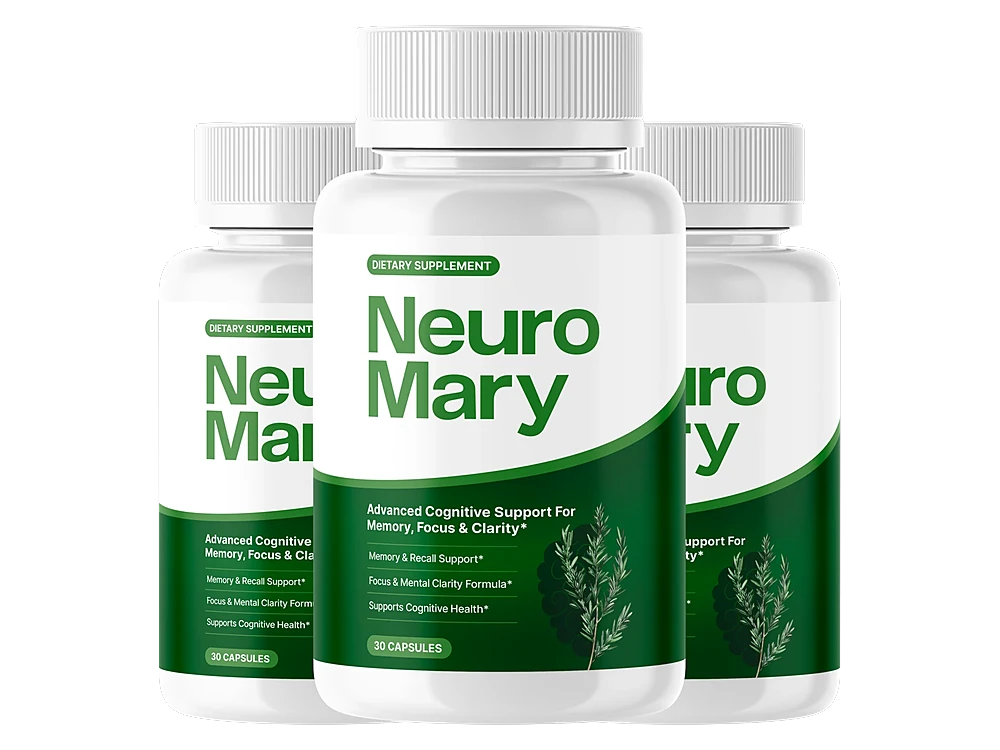
- Neuromary is a dietary supplement in capsule form, with 30 capsules printed per bottle.
- Format choice is about handling and routine, not about results.
- Every format still needs its label and directions read carefully.
- Directions for Neuromary are printed on the bottle.
Why format deserves a thought at all
Shoppers tend to look at the name on a bottle and ignore the shape of the thing inside. Yet format shapes your day-to-day experience more than you might expect. It decides how you store the product, whether you can carry it in a bag and how simple the routine feels.
This article compares four common formats purely as household objects. It makes no suggestion that one format works better than another for any purpose, and it does not discuss what any supplement is for. That is outside our remit.
Neuromary itself is a dietary supplement in capsule form. The bottle prints 30 capsules, as shown on the label. If you want the full product introduction first, read Neuromary explained.
Capsules: what handling looks like
A capsule is a self-contained unit inside a shell. In everyday terms, that gives capsules a few characteristics worth knowing.
- Tidy: nothing to measure, scoop or pour.
- Portable: a bottle slips into a bag or drawer.
- Plain: a capsule format does not need mixing or preparation.
- Swallowing: you need to be comfortable taking capsules.
That final point is the main practical consideration. Some people simply prefer not to swallow capsules, and that is a perfectly good reason to look elsewhere. Only you can judge it.
Neuromary comes in a round white bottle, with a label in white and green. The directions and the full Supplement Facts panel are printed on the bottle, and you should take it as directed on the label.
Try this: if you are unsure about capsules, think of the last time you took one. Was it a non-event, or did it bother you?
Tablets, powders and liquids
For balance, here is the same practical look at the other three.
Tablets are compact and often smaller than capsules, though some are quite large. They come in many shapes. They share a capsule's tidy, no-prep quality.
Powders need measuring and mixing. That can suit people who like a ritual, and it can irritate people in a hurry. Powders also need a clean scoop and a dry storage spot.
Liquids need measuring too, often with a dropper or cup. They can be awkward to travel with, and spills are always a possibility.
None of this makes any format superior. It is a set of trade-offs, and your own habits decide which ones matter. Read the label on whatever you buy, whatever the format.
Try this: picture your busiest morning of the week. Which format would you actually keep up with that day?
Storage, travel and everyday life
Once you have a format in view, think about where it will live. Capsules in a round bottle suit a shelf or a drawer. Read the storage guidance on the bottle, since the label is the proper source for it.
For travel, consider the following:
- Keep the product in its original bottle, so the label travels with it.
- Pack it somewhere it will not be crushed.
- Avoid decanting into unmarked containers, which separates the product from its directions.
That last point is easily overlooked. A bottle without a label is just a bottle, and you give up the Supplement Facts panel and the directions at the same moment.
If you want to see how format fits your overall routine before ordering, our order checklist is a simple way to work through it.
What stays the same in every format
Whatever the format, certain good habits carry over.
- Read the full label before you start.
- Look at the Supplement Facts panel, which lists ingredients and amounts.
- Follow the directions printed on the bottle.
- Keep your order details and any guarantee terms in one place.
The U.S. FDA publishes general consumer information about dietary supplements, whatever their form, at fda.gov. It is a sensible reference to keep bookmarked.
For Neuromary specifically, the brand states made in the USA, FDA registered, GMP certified and a natural product, all as stated by the brand. The label also carries supporting statements, which we do not paraphrase, so read them on the bottle.
Try this: whichever format you consider, ask yourself whether you could explain its directions to a friend after reading the label once. If not, reread it.
A short decision guide
To close, here is a small way to make the decision without overthinking it.
- Prefer something with no preparation? Capsules and tablets fit that description.
- Happy to measure and mix? Powders and liquids are options.
- Travel often? Think about spills, bulk and the original bottle.
- Dislike swallowing? Be honest about it, and choose accordingly.
If you decide capsules fit your habits, Neuromary is available in packs of 2, 3 and 6 bottles. The brand states a 60-day money-back guarantee, with refunds through customer support, and today's price is shown at checkout. Our pack comparison helps with that next choice.
Remember that this is a handling comparison and nothing more. It claims no outcome for any format, and neither should you assume one.
Try this: write your top two formats on a sticky label and cross out the one you would be least likely to keep up.